One of the first arguments Kathleen and I had — friendly, but real — was about a word.
She called Ilocano a dialect. I pushed back.
"If you speak Ilocano to someone who only speaks Tagalog," I asked her, "would they understand you?" She thought about it. "No." "Then it's not a dialect. It's a language."
She'd been told her whole life that Ilocano was a dialect of Filipino. That Tagalog was the real language. That the tongue she grew up speaking in Ilocos Norte — the one her grandmother sang in, the one her mother whispers prayers in — was a regional variation of something more important.
That's not linguistics. That's a power structure.
I came to this understanding through graduate work in Hawaii — studying language ideology, mother tongue instruction, and what researchers call linguistic agency: the capacity of a speaker to see their language as worthy, as complete, as theirs.
What I kept finding in the research was that when children are educated primarily in a language that isn't their own, literacy suffers — and by literacy I don't mean the ability to decode words on a page. I mean the full capacity to make meaning: to think complexly, to see themselves in a story, to know that their way of understanding the world is legitimate. Not because the children aren't capable — because the foundation isn't there. You can't build a house in the air.
In the Philippines, the school system conducts most instruction in English. For millions of Filipino children, that means learning to read in a language that isn't woven into their home, their meals, their songs, their grandmothers. Mother tongue instruction exists. But the cultural pressure — decades of it, centuries of it — tilts toward English. Toward Tagalog. Toward languages that signal upward mobility, assimilation, arrival.
Ilocano is what you speak in the province. What you carry quietly. What you call a dialect.
Kathleen didn't grow up thinking of her language that way to be small. She grew up that way because that's the water she swam in. Most people don't question the water.
I'm not pointing this out to make her the subject of a lesson. I'm pointing it out because she is one of the most intelligent, perceptive people I know — a native speaker of a language spoken by millions — and it took an outside perspective to name something she'd been living inside her whole life.
That's what internalized colonialism does. It doesn't announce itself. It just makes you call your language a dialect.
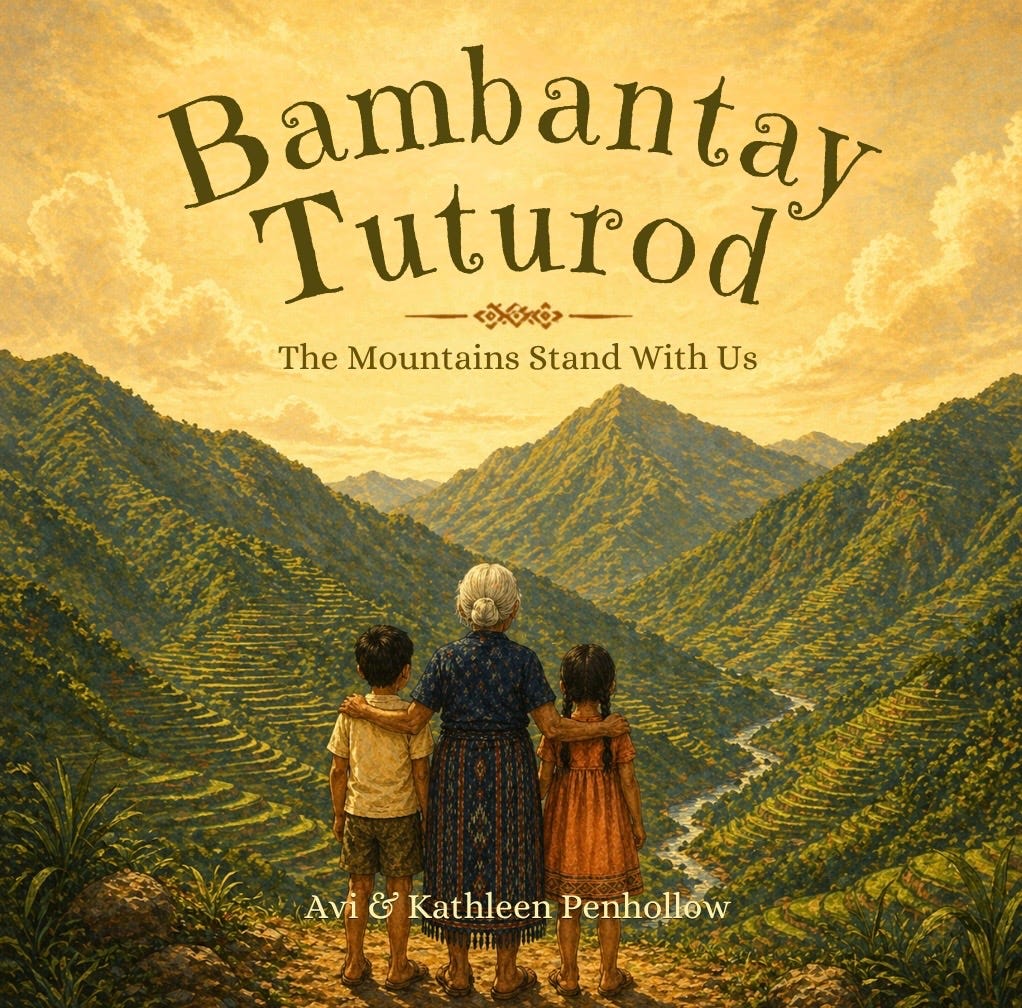
When we started making books together, we made a choice: Ilocano on top, bold. English below, in italics. Not "here is the real version and here is what it means." Both languages on the same page, in the same breath, as equal partners.
That's not just a design decision. It's an argument. It's saying: this language belongs here. It doesn't need to be translated out of existence to be understood. It doesn't need to apologize for being itself.
Our son Ravi is three. He already knows the word Bambantay. Not because we drilled him. Because the song is in our house, and the book is on his shelf, and one afternoon at a coffee shop near our home, he pointed at the mountains and said it out loud to a child he'd just met.
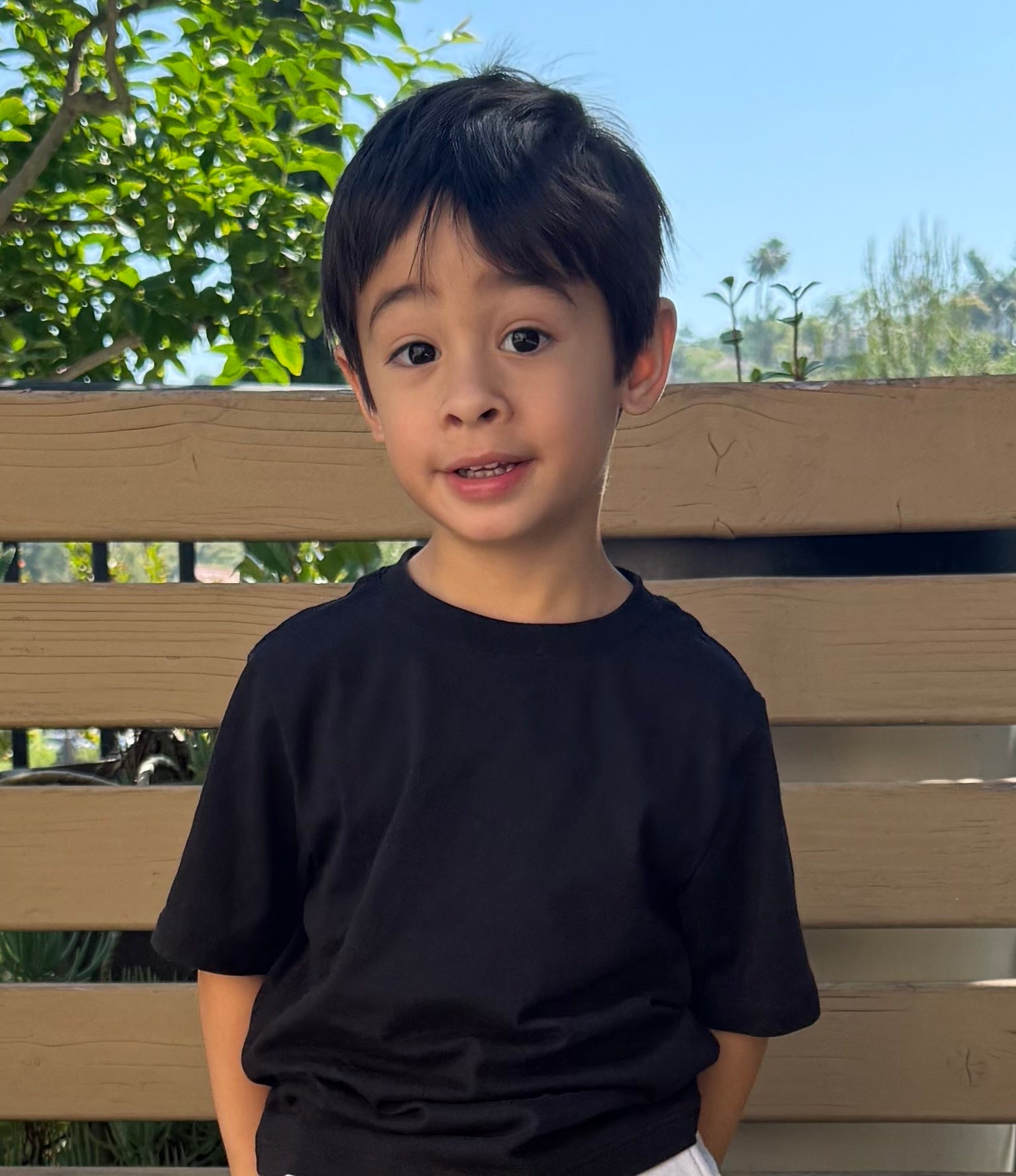
That's the whole project, right there.
Little Hollow Books is an imprint of Penhollow Studiolabs. Kathleen and Avi Penhollow's Filipino/Ilocano heritage series includes Bambantay Tuturod: The Mountains Stand With Us and Let's Go, Intayon! — available now at littlehollowbooks.com.